- Lazio's Stalemate with Ludogorets Highlights Europa League's Unpredictability Nov 29, 2024
- TECNO Extends AFCON Partnership Through 2027 With AI Push Mar 26, 2026
- Powerball jackpot rolls to $145 million after $127 million draw misses winner Sep 27, 2025
- Tennessee AG Steps In to Protect Elvis Presley's Graceland Amidst Legal Dispute with Riley Keough May 24, 2024
- Sika Anoa'i's Unwavering Support for Roman Reigns at WrestleMania 32 Sparks Emotional Tributes Jun 26, 2024
Religious Freedom in Africa: Rights, Conflicts, and Real-Life Stories
When we talk about religious freedom, the right to practice, change, or not practice any religion without government interference or social punishment. Also known as freedom of worship, it’s not just about going to church or mosque—it’s about whether your beliefs are safe from laws, mobs, or even your own family. In Africa, this isn’t a theoretical right. It’s lived every day—in villages where traditional leaders ban converts, in cities where mosques are burned after sermons, and in courtrooms where Christians and Muslims fight for the same space to teach their children.
Religious freedom doesn’t exist in a vacuum. It’s tied to church and state, how governments handle religion in public life, from school prayers to constitutional clauses. In some African countries, the constitution says everyone is free to believe. But in practice, if you leave Islam in Nigeria, you lose your inheritance. If you start a new church in Kenya, you need police approval. And in countries like Eritrea, the state only recognizes four religions—everything else is illegal. This isn’t just about laws. It’s about power. Who controls the narrative? Who gets to say what counts as "real" faith? And who gets punished when they disagree?
Then there’s human rights, the universal standards that protect dignity, expression, and belief. When a pastor is jailed for preaching peace, or a student is expelled for refusing to pray in a certain way, it’s not just a religious issue—it’s a human rights violation. And yet, most African governments don’t treat it that way. They call it "social harmony" or "national unity," but what it really means is silence. The tension isn’t between religions. It’s between those who believe in control and those who believe in choice.
You’ll find stories here that don’t make headlines. A mother in Ghana who lost her job because she started attending a Pentecostal church. A Muslim school in Tanzania that was shut down for teaching the Quran too openly. A traditional healer in Zambia who was accused of witchcraft after converting to Christianity. These aren’t outliers. They’re symptoms of a deeper problem: freedom isn’t written into the law—it’s won in the streets, in classrooms, and in quiet homes where people still dare to believe differently.
What follows isn’t just news. It’s proof that religious freedom in Africa isn’t a slogan. It’s a daily battle. And the people fighting it aren’t activists in suits—they’re teachers, parents, students, and pastors who just want to live without fear. Read on. You’ll see how faith, law, and power collide—and who’s paying the price.
Politics
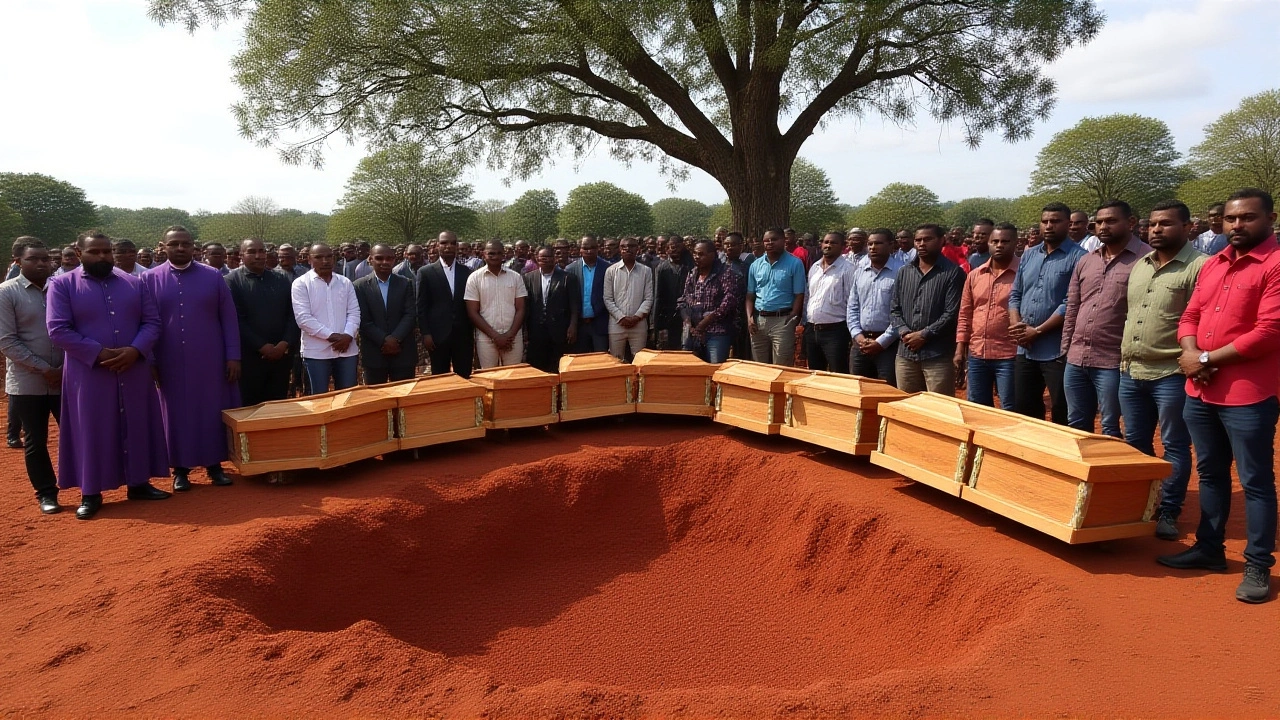
Trump Designates Nigeria as Religious Freedom Violator, Threatens Aid Cuts and Military Action
- Katlego Sean Mahaye
- Nov 3, 2025
Donald Trump designated Nigeria a 'Country of Particular Concern' for religious persecution, citing 3,100 Christian deaths in 2023–2024, and threatened to cut aid and prepare for military action if Nigeria fails to act.