- Future of BRICS Currency: Exploring Alternatives in Global Finance Dec 7, 2024
- South Africa Sets Stiff 353-Run Target for Pakistan in Tri-Series Showdown Feb 12, 2025
- Zambia U‑17 women drawn with Paraguay, Japan, NZ in World Cup Group F Oct 10, 2025
- Pastor Paseka 'Mboro' Motsoeneng's Bail Hearing: A Pivotal Moment in His Legal Battle Sep 13, 2024
- FG Opens Paramilitary Recruitment for 30,000 Positions, Portal Live Until August 4 Jul 16, 2025
Country of Particular Concern
When the U.S. State Department calls a nation a Country of Particular Concern, a formal designation for governments that engage in severe violations of religious freedom. Also known as CPC, this label isn’t just paperwork—it’s a signal that the U.S. may impose sanctions, cut aid, or push for global action. This isn’t a random list. It’s based on documented evidence: people jailed for prayer, churches shut down, minorities forced to convert, or worse. The designation comes from the International Religious Freedom Act of 1998, and it’s meant to pressure regimes that treat belief as a crime.
It’s not about politics. It’s about people. Countries like North Korea, Eritrea, and Saudi Arabia have been on this list for years—not because of what they say, but because of what they do. In Eritrea, members of unregistered faiths are locked up without trial. In North Korea, Christians are sent to labor camps. These aren’t rumors. They’re verified by U.N. reports, human rights groups, and survivors who escape. The U.S. State Department, the federal agency responsible for foreign affairs and diplomatic relations reviews these cases annually. The list changes slowly, because proof takes time, and governments fight back. But when a country is added, it’s usually after years of silence from the world.
The consequences aren’t always visible. Sanctions might freeze assets, block arms sales, or restrict visas for officials. But the real impact is felt by families who can’t worship openly, teachers who lose their jobs for teaching faith, or children who grow up afraid to speak their beliefs. The religious freedom, the right to practice, change, or reject religion without fear of punishment is often the first right to vanish under authoritarian rule. And when that goes, other freedoms follow.
Some countries on the list deny the accusations. Others quietly change their policies to avoid the label. A few have been removed after reforms—like Uzbekistan, which freed religious prisoners and reopened churches after years on the list. That’s the point: this isn’t just punishment. It’s a lever. It gives voice to the voiceless. And it forces the world to pay attention.
Below, you’ll find real stories and reports tied to this designation—cases where governments crossed a line, and where people fought back. These aren’t abstract policies. They’re lives on the line. What happens in one country often echoes in others. Pay attention. Because the next name on the list could be your neighbor’s homeland.
Politics
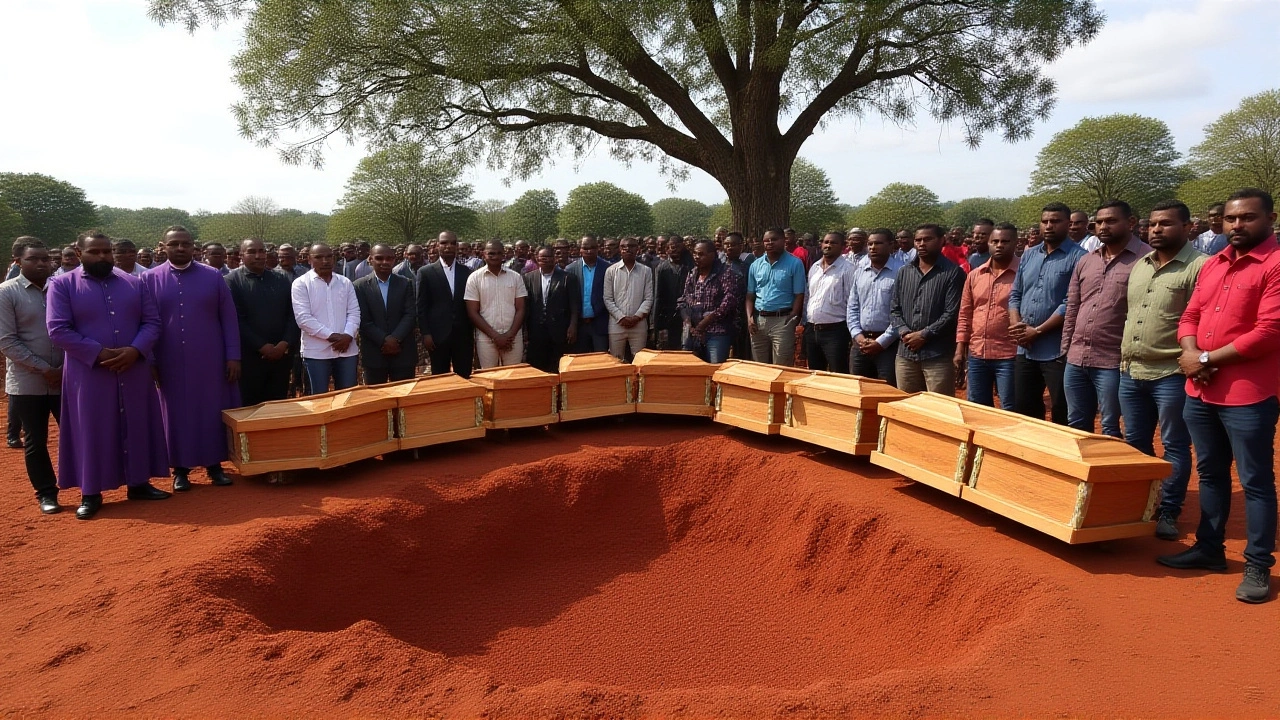
Trump Designates Nigeria as Religious Freedom Violator, Threatens Aid Cuts and Military Action
- Katlego Sean Mahaye
- Nov 3, 2025
Donald Trump designated Nigeria a 'Country of Particular Concern' for religious persecution, citing 3,100 Christian deaths in 2023–2024, and threatened to cut aid and prepare for military action if Nigeria fails to act.