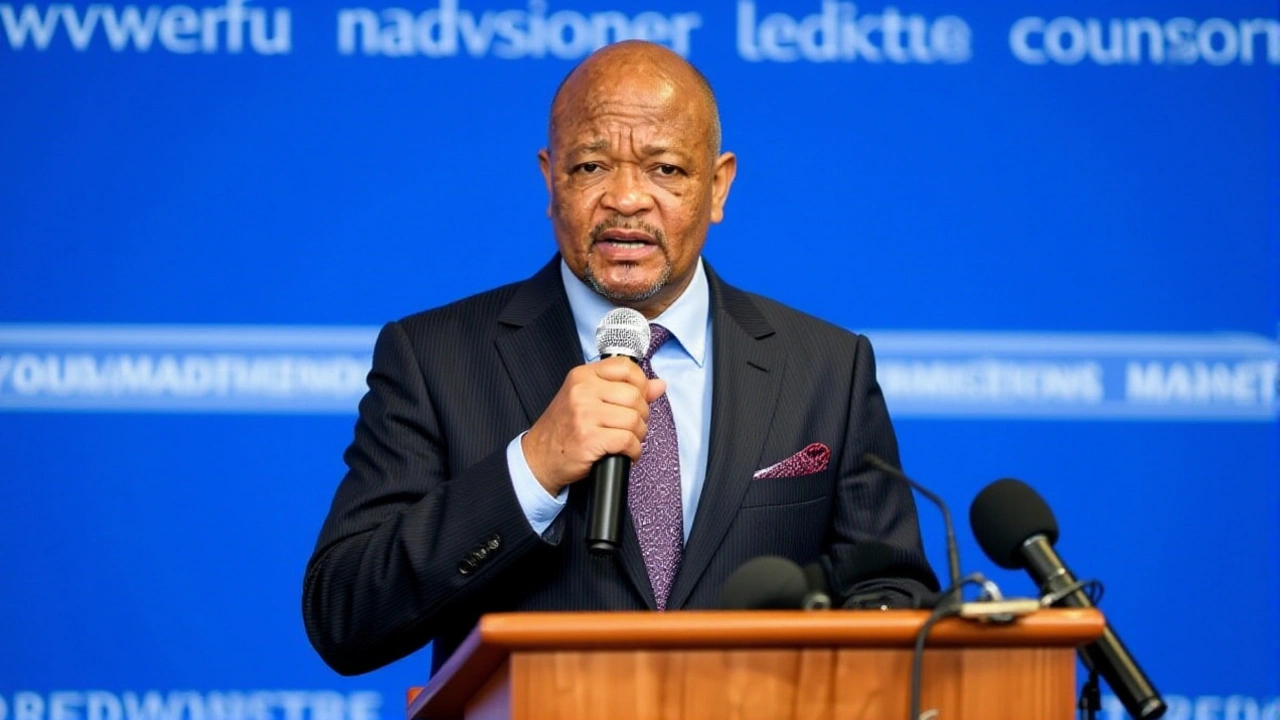
When Senzo Mchunu stepped into the courtroom at the Brigitte Mabandla Justice College on Tuesday, December 2, 2025, the room fell silent. The suspended Police Minister, once a trusted figure in President Cyril Ramaphosa’s cabinet, now stood accused of turning law enforcement into a political tool. "Through all my public positions," he declared, "I have never been accused of corruption, not once." The statement was calm. But the implications? Devastating.
The Accusations That Shook the SAPS
It all began on July 6, 2025, when Lieutenant General Nhlanhla Mkhwanazi, the KwaZulu-Natal Provincial Police Commissioner, dropped a bombshell in a live media briefing. He didn’t just hint at corruption—he laid out a pattern. Allegedly, Mchunu had pressured senior SAPS officials to stall investigations into politically connected individuals. He allegedly intervened in promotions to favor ANC-aligned officers. And he reportedly used his authority to steer lucrative contracts toward allies. Within days, President Ramaphosa placed Mchunu on special leave. The SAPS, already reeling from years of scandals, looked like it was crumbling from the inside.Denials Under Oath
Mchunu, represented by heavyweight advocate Tembeka Ngcukaitobi SC, didn’t just deny the allegations—he framed them as unprecedented. "This is the first time," he insisted, "that I have been accused of such allegations." He dismissed claims linking him to businessman Matlala, who told Parliament’s ad hoc committee he spent between R150,000 and R200,000 to fly campaign staff to Cape Town for the ANC’s January 8 celebrations in 2025. Matlala said the money was an investment: protection for his R360-million police tender. Mchunu claimed he knew nothing of the transactions until they became public. "My knowledge of these matters arose only after they became a subject of evidence," he told the commission.He also brushed off ties to Mogotsi and Molefe, calling the former "just a comrade" and denying any friendship with the latter. These weren’t casual names. They were anchors in a web of alleged illicit deals.
The Disbanded Task Team and Systemic Rot
Mchunu doubled down on his decision to disband the National Political Killings Task Team (NPKTT), a unit formed to investigate politically motivated murders. He repeated the same justifications he gave Parliament: inefficiency, duplication, lack of resources. But critics saw something darker. The NPKTT had been one of the few units actively tracking killings tied to political rivalry—especially in KwaZulu-Natal. Its removal coincided with a sharp drop in prosecutions. Now, experts like Prof Kholofelo Rakubu of the Tshwane University of Technology warn that the disbanding wasn’t just bureaucratic—it was strategic. "When you remove the only body tasked with investigating politically linked murders," Rakubu said after Mchunu’s testimony, "you send a signal: some lives are less worth protecting."And it’s not just the NPKTT. The commission also heard damning testimony about systemic failures in the Echoleni Metro Police Department, where officers allegedly took bribes to ignore drug syndicates and theft rings. These weren’t rogue actors. They were symptoms.
What Comes Next
Mchunu’s testimony was only the beginning. He’s scheduled to return on Thursday, December 4, and Friday, December 5, 2025, for cross-examination. That’s when the real pressure will begin. The commission will dig into his alleged links with Shadrack Sibiya, the suspended Deputy Police Commissioner who reportedly received bribes from Matlala. If Sibiya’s testimony implicates Mchunu directly, the case could shift from political scandal to criminal prosecution.The Madlanga Commission isn’t just investigating one man. It’s probing a decade of political interference in South Africa’s criminal justice system. The stakes? The credibility of the entire SAPS. The public’s trust. And whether the state can still enforce the law without fear or favor.
Why This Matters to Every South African
This isn’t just about a minister. It’s about who gets investigated—and who doesn’t. It’s about whether your neighbor’s murder gets attention, or whether a politician’s associate walks free because the case "got deprioritized." The Madlanga Commission’s findings could determine whether South Africa’s institutions can still function—or if they’ve become tools of patronage.For ordinary citizens, the message is clear: if the police are no longer impartial, then justice is a privilege, not a right. And that’s a country no one should accept.
Frequently Asked Questions
Why is the Madlanga Commission investigating Senzo Mchunu specifically?
The commission is investigating Mchunu because Lieutenant General Nhlanhla Mkhwanazi provided detailed testimony alleging he used his ministerial authority to interfere with police investigations, manipulate appointments, and protect politically connected individuals. These claims were corroborated by financial evidence tied to businessman Matlala, who linked payments to Mchunu’s campaign and a R360-million police tender.
What was the National Political Killings Task Team, and why was its disbanding controversial?
The NPKTT was a specialized unit created to investigate politically motivated murders, particularly in KwaZulu-Natal, where political violence has long been a problem. Its disbandment in 2024 coincided with a sharp decline in prosecutions of such cases. Experts argue this wasn’t administrative efficiency—it was an intentional removal of oversight, allowing politically connected suspects to operate with impunity.
Who is Matlala, and what role does he play in this case?
Matlala is a businessman who secured a R360-million contract with the South African Police Service. He testified before Parliament that he spent R150,000–R200,000 to fly campaign staff to the ANC’s January 8, 2025 event in Cape Town. He claims the payments were meant to protect himself from prosecution, implying they were bribes to secure the tender. Mchunu denies any knowledge of the transactions.
What happens if Mchunu is found guilty by the Madlanga Commission?
The commission can’t prosecute, but it can refer findings to the National Prosecuting Authority. If evidence of criminal conduct is confirmed, Mchunu could face charges of corruption, fraud, or abuse of power. He would likely lose his ministerial position permanently and possibly face imprisonment. His political career, already suspended, would be over.
How does this affect public trust in the police?
Public trust in the SAPS is already at historic lows—only 34% of South Africans say they believe police act impartially, according to a 2024 Afrobarometer survey. Mchunu’s case reinforces the perception that law enforcement serves political elites, not citizens. If senior officials can shield allies from investigation, why would anyone report a crime?
When will the Madlanga Commission release its final report?
The commission has until June 2026 to submit its final report to the President. But interim findings could be released earlier, especially if urgent criminal referrals are made. Given the gravity of the allegations, legal experts expect the report to trigger multiple investigations, not just against Mchunu, but across the SAPS leadership.
13 Comments
Crystal Zárifa December 5 2025
so like... if the police are just a branch of the ANC now, what’s the point of voting? 🤔
Serena May December 7 2025
lol he said "first time" like he’s never done this before. 😂
Andrea Hierman December 7 2025
It is profoundly disconcerting to observe the erosion of institutional integrity when political loyalty supersedes the rule of law. The implications for democratic accountability are, frankly, catastrophic.
Bryan Kam December 8 2025
you can’t make this up. it’s like a South African mafia movie.
Jane Roams Free December 9 2025
i’ve seen this play out in other countries. when the cops stop protecting everyone and start protecting the connected, the whole system starts to rot from the inside. it’s sad.
Danny Johnson December 10 2025
man, i hope someone’s recording all this. if the truth comes out, maybe we can actually fix something.
Anthony Watkins December 11 2025
this is why we need to build our own systems. the state is a lost cause. 🇺🇸
Cheryl Jonah December 12 2025
i heard the whole thing was staged by the CIA to destabilize africa. they hate when countries try to be independent.
Jason Davis December 13 2025
the fact that they disbanded the task team that was actually doing something… that’s not incompetence. that’s intent. and if you’re not seeing that, you’re not paying attention. the NPKTT wasn’t a burden-it was a threat to the right people. they didn’t shut it down because it was inefficient. they shut it down because it worked.
and now? murders go uninvestigated, witnesses disappear, and the only thing that gets attention is who’s got the right last name or the right donor. this isn’t about one minister. it’s about a system that decided some lives are disposable if they don’t serve the agenda.
i’ve talked to people in KZN. they don’t even call the police anymore. why? because the police don’t come for them. they come for the ones who pay. and when you live in a place where your neighbor’s murder is just a footnote in a political memo… you stop believing in justice. you just survive.
and the worst part? everyone knew. the media knew. the courts knew. the ANC knew. but no one did anything until it got too loud to ignore. now they’re pretending this is a surprise. it’s not. it’s the natural result of decades of silence.
ryan pereyra December 14 2025
the institutional decay here is a textbook case of principal-agent failure compounded by rent-seeking behavior within a clientelist state apparatus. the disbandment of the NPKTT represents a strategic realignment of enforcement priorities to align with elite capture dynamics-essentially, the state has become a private equity firm for political patrons.
Sarah Day December 15 2025
i just hope the commission doesn’t get sidelined like the others. we’ve seen this movie before.
Cheri Gray December 17 2025
i dont know if i beleive he didnt know about the money... but even if he did, its hard to prove right? 🤷♀️
James Otundo December 18 2025
this guy thinks he’s above the law because he’s got a fancy title. meanwhile, real people are getting killed and no one cares. you think he’s gonna go to jail? please. he’ll get a nice consultancy job in Dubai and call it a day.