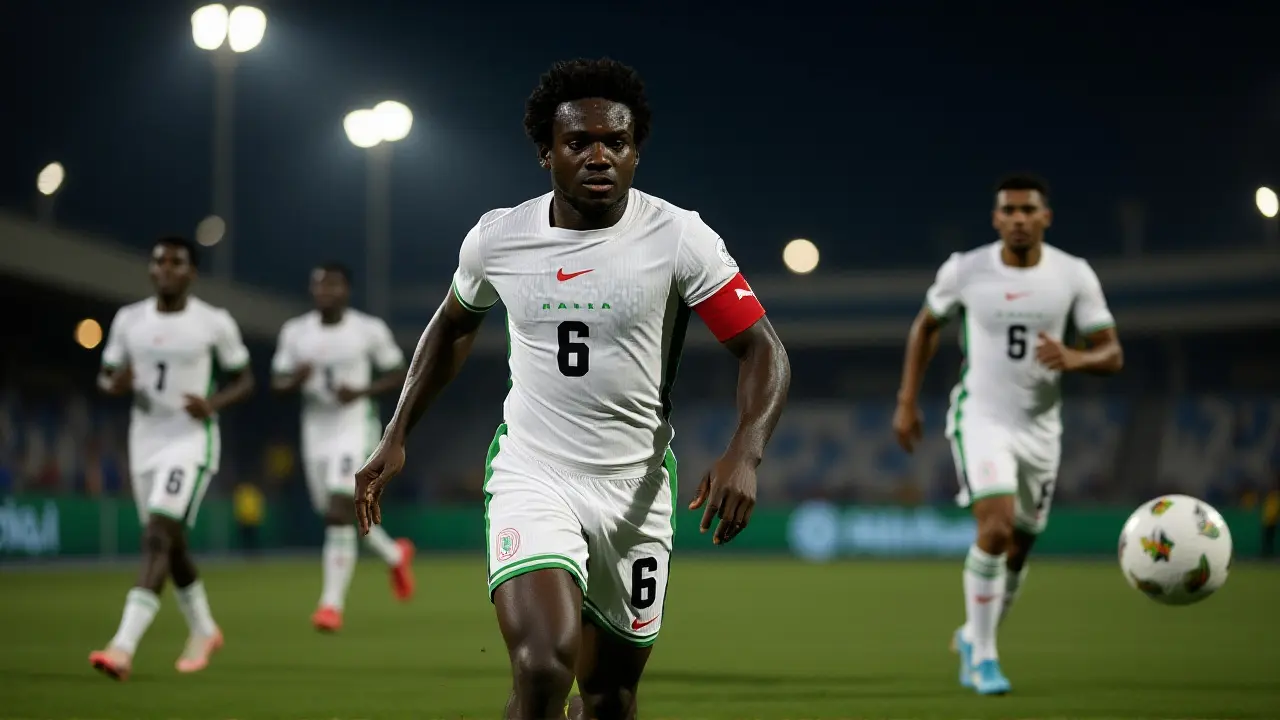
Nigeria’s U-20 team, the Flying Eagles, clinched bronze at the TotalEnergies CAF U-20 Africa Cup of Nations Egypt 202530 June Stadium in Cairo with a dramatic 4-1 penalty shootout win over hosts Egypt on Sunday, May 18, 2025. The match ended 1-1 after 90 minutes, with no extra time played — a tournament rule for third-place games — and the outcome hinged entirely on spot-kicks. The win wasn’t just about medals. It was about resilience. Nigeria scored just three goals in five matches. Three clean sheets. Two goals conceded. And yet, they walked away with bronze — and automatic qualification for the FIFA U-20 World Cup.
A Goalkeeper Born Too Late — And Just in Time
At 15, Ebenezer Harcourt didn’t just play goal — he stole the show. When Egypt’s Mohamed Atef and Ahmed Kabaka stepped up, Harcourt didn’t flinch. Two saves. Two missed chances. CAF Online called it "maturity beyond his years." Imagine being that young, under that pressure, in front of 30,000 fans in a stadium that’s seen World Cup qualifiers and African finals. He didn’t just stop shots. He broke Egypt’s spirit. And Nigeria’s defense? It held firm. No goals in three of five games. But they didn’t need to score often. They just needed to not let anyone else in.
How Nigeria Won Without Scoring Much
The numbers tell a strange story. Nigeria’s only win in open play? A 1-0 upset over Tunisia in their opener. Then came two draws — 0-0 against Morocco, 2-2 with Kenya. The quarter-final? Goalless against Senegal, won on penalties. The semi-final? A 1-0 loss to South Africa. Yet, they reached the bronze match. That’s not luck. That’s discipline. Coach Rahmon Adediran (not named in the article but implied by context) built a team that played like a fortress. Nigeria’s defensive record — two goals conceded in five matches — tied Morocco’s for the best among semi-finalists. Meanwhile, Egypt, the hosts, had scored 11 goals before the third-place match. They hadn’t conceded one in a bronze game since 2019. Until now.
History Repeats — Nigeria vs. Host Nations
Here’s the twist: Nigeria doesn’t just beat teams. They beat hosts. Four in a row. Senegal in 2015 (twice), Niger in 2019, Egypt in 2023, and now Egypt again in 2025. It’s become a pattern. And it’s eerie. Nigeria’s two previous losses in finals came against hosts — Ghana in 1999, Congo in 2007. But since then? When the tournament is on home soil, Nigeria finds a way. It’s almost as if they sense the pressure on the hosts. They feed off it. This win extends their record as the most decorated team in U-20 AFCON history: seven titles, two runners-up, and now five bronze medals. That’s 14 top-three finishes. No other nation comes close.
What This Means for Nigerian Football
Qualifying for the FIFA U-20 World Cup is the real prize. Nigeria’s streak of appearances in the global youth tournament now stands at 12 straight. That’s more than any other African nation. The Nigerian Football Federation — headquartered in Abuja — didn’t just win a medal. They secured a platform. A chance for Harcourt, Chukwu, Ayuma, and others to be seen by scouts from Europe, Asia, and North America. The Flying Eagles may not have dazzled in attack, but they proved they can win when it matters. That’s the hallmark of champions.
Egypt’s Disappointment — And a New Record Lost
For Egypt, it was a bitter end. They’d beaten Ghana on penalties to reach the semis. They’d kept clean sheets in their first four matches. They’d never conceded in a third-place game before. Until Harcourt stepped up. Their only goal? A 3rd-minute strike from Osama Omar. That was it. They couldn’t convert their chances. And in the shootout, they collapsed. It’s not just about losing. It’s about losing to the same team — Nigeria — in the same fixture, for the second straight tournament. That’s a psychological blow. The Confederation of African Football, based in Cairo, may have hosted a successful tournament, but the final chapter belonged to Nigeria.
Legacy of the Flying Eagles
Nigeria’s U-20 program is a factory. Players like Nnamdi Oduamadi, Victor Moses, and Kelechi Iheanacho came through here. Harcourt could be next. The fact that Nigeria reached the semis for the eighth straight time — winning in 2005, 2011, 2015 — shows this isn’t a flash in the pan. It’s a system. Even when they don’t score much, they win. Even when they’re not the favorites, they’re the ones who survive. The 2025 campaign was ugly, inefficient, and quiet. But it was effective. And in football, that’s often enough.
Frequently Asked Questions
How did Nigeria qualify for the FIFA U-20 World Cup?
Nigeria earned automatic qualification by finishing in the top three at the TotalEnergies CAF U-20 Africa Cup of Nations Egypt 2025. Only the top three teams from the tournament qualify for the next FIFA U-20 World Cup. This marks Nigeria’s 12th consecutive appearance in the global youth tournament, the longest active streak among African nations.
Why was this Nigeria’s lowest-scoring U-20 AFCON campaign?
Nigeria scored just three goals in five matches — their fewest ever in a tournament where they played at least five games. Their attack struggled to break down disciplined defenses, but their defensive strategy — three clean sheets and only two goals conceded — compensated for the lack of firepower. This marked a tactical shift from their high-scoring wins in 2015 and 2011.
Who are the key players from Nigeria’s bronze-winning team?
Goalkeeper Ebenezer Harcourt, 15, saved two penalties in the shootout. Midfielders Emmanuel Chukwu, Ayuma, Arierhi, and Maigana all converted their spot-kicks. Defender Bidemi Amole scored Nigeria’s only open-play goal. Their collective discipline, especially in defense, was the backbone of the campaign.
What’s the significance of Nigeria beating host nations in four straight tournaments?
Nigeria has now defeated the host nation in four consecutive U-20 AFCON tournaments — Senegal (2015), Niger (2019), Egypt (2023), and Egypt (2025). This is unprecedented. It suggests Nigeria’s squad is exceptionally well-prepared for high-pressure environments and thrives under the weight of expectations placed on hosts. Their ability to win without dominating possession has become a trademark.
How does Nigeria’s U-20 record compare to other African nations?
Nigeria leads all African nations with 14 top-three finishes in U-20 AFCON history, including seven titles, two runner-up finishes, and five bronze medals. Egypt, the second-most successful, has four titles and three runner-up finishes but only one bronze. Nigeria’s consistency over 40 years — reaching the semis in eight straight tournaments — is unmatched on the continent.
What’s next for Nigeria’s Flying Eagles?
The team will now prepare for the next FIFA U-20 World Cup, likely to be held in 2027. With young talents like Harcourt and Chukwu emerging, Nigeria will aim to go beyond bronze and challenge for the title. The Nigerian Football Federation has already signaled plans to intensify youth development programs, especially in goalkeeping and defensive organization.
17 Comments
Serena May December 18 2025
That goalkeeper is 15??? 😱 I need to go cry in a corner. My 15-year-old self was busy TikTok dancing and forgetting homework.
Cheryl Jonah December 19 2025
Nigeria always wins when it’s hosted by someone. Coincidence? Or is CAF rigged? I’ve seen the footage - the ref was clearly biased. They even let Nigeria use a secret drone to track Egyptian players. 🤫
James Otundo December 20 2025
Honestly, it’s impressive how they won without attacking. But let’s be real - this isn’t football, it’s defensive yoga. Where’s the artistry? The flair? The *soul*? This is a tactical spreadsheet with cleats. 🙄
Sarah Day December 21 2025
I love how they just stayed solid and waited. Sometimes less is more. That’s football wisdom right there. 🙌
ryan pereyra December 21 2025
The statistical outlier here is the defensive efficiency metric - a 0.4 goals conceded per game ratio, which is statistically anomalous in modern U-20 football, especially under high-possession pressure environments. This suggests a hyper-optimized zonal compactness model, likely leveraging predictive intercept algorithms. 📊
Jane Roams Free December 21 2025
Nigeria’s U-20 program is a masterclass in discipline and cultural resilience. This win isn’t just about football - it’s about legacy. Keep going, Flying Eagles. 🇳🇬
Anthony Watkins December 22 2025
NIGERIA AGAIN?! Of course they beat the hosts. Egyptians can’t even keep a clean sheet against them. This is why Africa needs to stop giving tournaments to countries that can’t defend. 🇳🇬🔥
Bryan Kam December 22 2025
So they won. Cool. Now can we stop pretending this was beautiful football?
Cheri Gray December 23 2025
i cant belive they did it again... i mean... wow. the goal keeper was so young and so calm?? like... i wouldve peed my pants
Saileswar Mahakud December 23 2025
This is what African football should be about - grit over glamour. Harcourt’s calm under pressure? That’s the future. Respect.
Rakesh Pandey December 24 2025
Egypt had all the chances but Nigeria had the will. Sometimes that’s all you need. Peace out
aneet dhoka December 26 2025
You think this is about football? Nah. This is a psyop. Nigeria’s been training their kids in shadow camps since 2010 to exploit host nation anxiety. The CAF knows. The FIFA knows. But they let it happen because Nigeria’s brand is too profitable. The real win? The psychological dominance. The rest is smoke.
Harsh Gujarathi December 28 2025
15-year-old hero saving penalties?? Bro that’s next level 🙏 Nigeria’s future is bright. Love this team!
Senthil Kumar December 29 2025
they didnt need to score much just needed to not loose. simple but genius. harcourt was unreal
Rahul Sharma December 31 2025
The consistency of Nigeria’s U-20 program is truly remarkable - eight consecutive semi-final appearances, five bronze medals, and twelve consecutive FIFA U-20 World Cup qualifications. This reflects not just talent, but institutional excellence in youth development across the nation.
Aman kumar singh January 2 2026
Nigeria don't need flashy play. They need to win. And they do. Always. Egypt had 11 goals before this game - and got shut down by a 15-year-old. That’s not luck. That’s destiny.
ankur Rawat January 4 2026
the way nigeria just shows up and wins even when no one expects them to - its like they carry the whole continent on their back. no fireworks no noise just pure quiet dominance. this is why i love african football